
Most ecommerce migrations damage SEO.
Not on purpose. Nobody sets out to lose rankings. But it happens anyway because SEO gets treated as an afterthought instead of a critical part of the migration process.
Your URLs change. Your site structure changes. Your page speed changes. All of these affect rankings.
Get it right and your SEO might even improve. Get it wrong and you will spend months trying to recover traffic that should never have been lost.
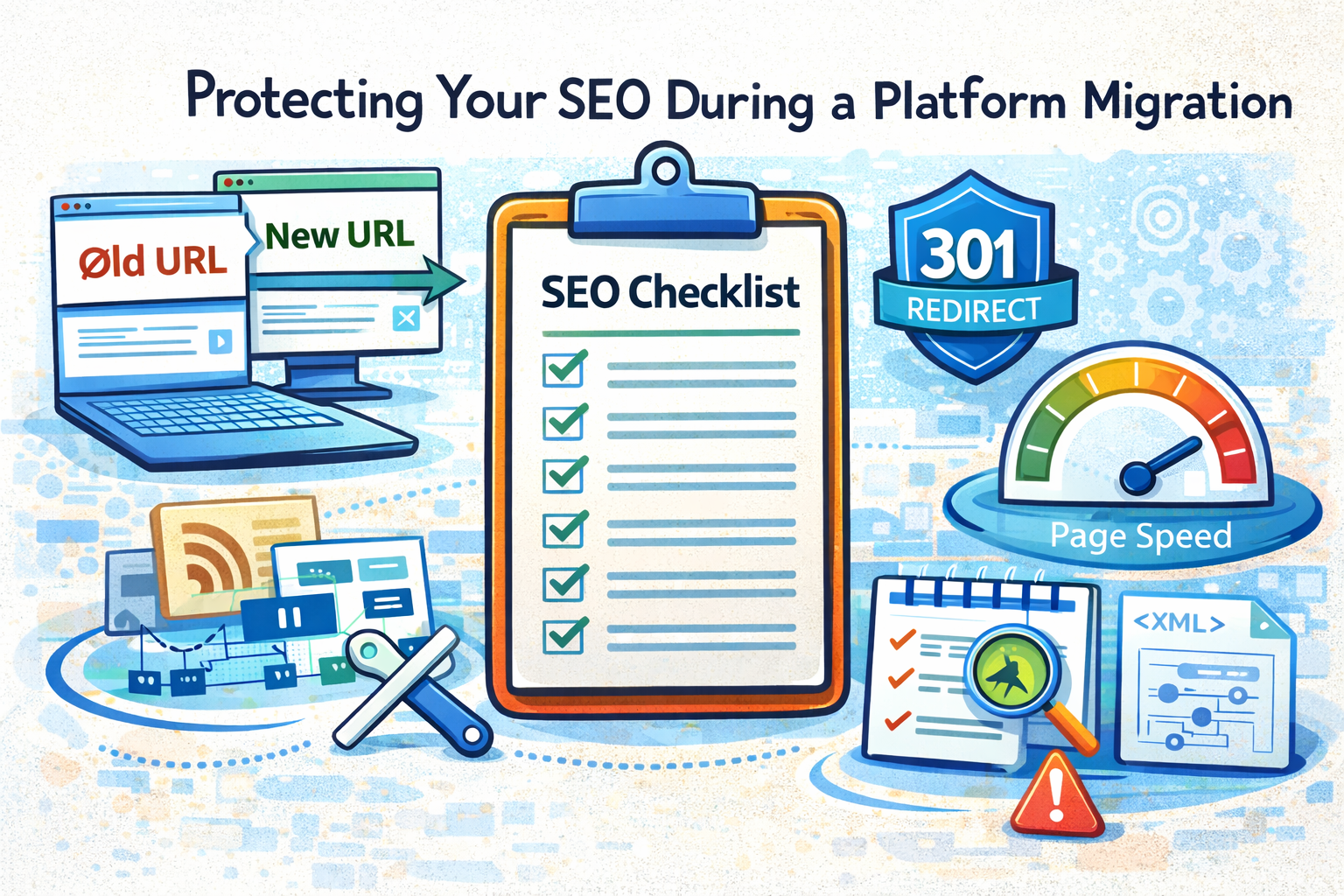
Here is how to protect your SEO during a migration.
Why Migrations Tank SEO
Google has indexed your site. It knows your URLs, your page structure, your content, your internal linking. It has assigned rankings based on all of this.
When you migrate, all of that changes.
URLs change. /category/subcategory/product.html becomes /products/product. Google loses the old URL and has to find the new one.
Site structure changes. Your categories might be organised differently. Your navigation might change. Your internal linking structure shifts.
Technical implementation changes. Different platform means different HTML, different structured data, different page speed.
If you do not handle these changes carefully, Google gets confused. Rankings drop. Traffic disappears.
The Critical SEO Checklist
Here is what you must do to protect your SEO during a migration:
1. Map Every URL
Before you migrate, create a complete list of every URL on your current site. Products, categories, blog posts, CMS pages, everything.
Then map each old URL to its equivalent on the new platform.
This is tedious. It takes time. But it is the single most important thing you can do for SEO.
2. Set Up 301 Redirects
Once you have your URL map, set up 301 redirects from every old URL to its new equivalent.
Not 302 redirects. Not meta refreshes. 301 redirects.
A 301 tells Google the page has permanently moved and passes the ranking signal to the new URL.
Test every redirect before launch. Use a redirect checker tool to make sure they work and do not create redirect chains (old URL → temporary URL → final URL).
3. Preserve URL Structure Where Possible
The easiest way to protect SEO is to keep your URLs the same.
If your old platform used /products/product-name and your new platform can use the same structure, do it. If your categories were /category-name, keep them that way.
Every URL you change is a risk. Minimise changes where you can.
4. Fix Structured Data
Structured data (schema markup) helps Google understand your pages. Products, reviews, breadcrumbs, FAQs.
Different platforms output structured data differently. Make sure your new platform has proper schema markup for everything that matters.
Test it with Google’s Rich Results Test tool before launch.
5. Maintain Page Speed
Page speed is a ranking factor. If your new platform is slower than your old one, it will hurt rankings.
Test page speed before and after migration. If the new site is slower, fix it before you launch. Optimise images, reduce app bloat, choose a fast theme.
Use Google PageSpeed Insights and aim for similar or better scores than your current site.
6. Keep Internal Linking Strong
Internal links help Google understand your site structure and pass ranking power between pages.
Make sure your new site has strong internal linking. Navigation, related products, blog post links, footer links. Do not orphan important pages.
7. Preserve Content
If a page ranks well, keep the content. Do not use migration as an excuse to completely rewrite product descriptions or delete blog posts.
You can improve content after migration. But during migration, preserve what is working.
8. Update XML Sitemap
Generate a new XML sitemap for your new platform and submit it to Google Search Console immediately after launch.
This helps Google discover your new URLs quickly.
9. Monitor Google Search Console
Watch Google Search Console closely for the first month after migration.
Look for:
- Crawl errors (404s, broken redirects)
- Index coverage issues (pages not being indexed)
- Mobile usability problems
- Structured data errors
Fix issues immediately. The faster you catch problems, the less damage they do.
10. Do Not Change Everything At Once
Do not use migration as an excuse to redesign the entire site, reorganise all your categories, rewrite all your content, and change your domain name.
Each change is a risk. Minimise risks by changing only what is necessary.
You can improve things after the migration is stable. But during migration, focus on moving what you have without breaking it.
Common SEO Mistakes
Here are the mistakes we see most often:
Missing redirects. Forgetting to redirect old URLs, or only redirecting products and forgetting categories, blog posts, and CMS pages.
Redirect chains. Old URL redirects to a temporary URL which redirects to the final URL. This dilutes ranking power and confuses Google.
Broken internal links. Links on the new site that still point to old URLs instead of new ones.
Duplicate content. Leaving the old site live and indexable while the new site is also live, creating duplicate content issues.
No sitemap update. Forgetting to tell Google about the new URLs, so it takes weeks to discover them.
Ignoring mobile. The new site works fine on desktop but has problems on mobile. Google indexes mobile-first, so this tanks rankings.
How Long Does SEO Recover?
If you do everything right, SEO should be stable within a few weeks.
You might see small ranking fluctuations while Google re-indexes the new site. But traffic should not drop significantly.
If you make mistakes, recovery takes months. Sometimes longer.
Google needs to re-crawl everything, re-index the new URLs, and recalculate rankings. If you have broken redirects or missing pages, Google cannot do this properly.
The lesson is clear. Get it right the first time.
What To Do Next
Do not treat SEO as something to worry about after migration. Build it into the migration plan from day one.
Map URLs early. Set up redirects carefully. Test everything before launch. Monitor closely after launch.
If you are not confident doing this yourself, get help. The cost of professional SEO support during migration is far less than the cost of lost traffic.
Need help with your migration? Our Platform Migration Service includes full SEO protection with URL mapping, redirect setup, and post-launch monitoring. Book a discovery call and we will show you how we protect your rankings.