Visualsoft to Shopify · Your Options Explained
Leaving Visualsoft?
You Don't Need Them to Move to Shopify.
Visualsoft are repositioning themselves as a Shopify partner for their 800+ customers. It's a reasonable business move for them. Whether it's the right move for you is a different question.
Two stores we have moved off Visualsoft
 UKDJ
DJ, lighting and AV retailer. Around 3,000 products, 250 collections and 7,500 redirects, moved with no downtime.
Read the case study →
UKDJ
DJ, lighting and AV retailer. Around 3,000 products, 250 collections and 7,500 redirects, moved with no downtime.
Read the case study →
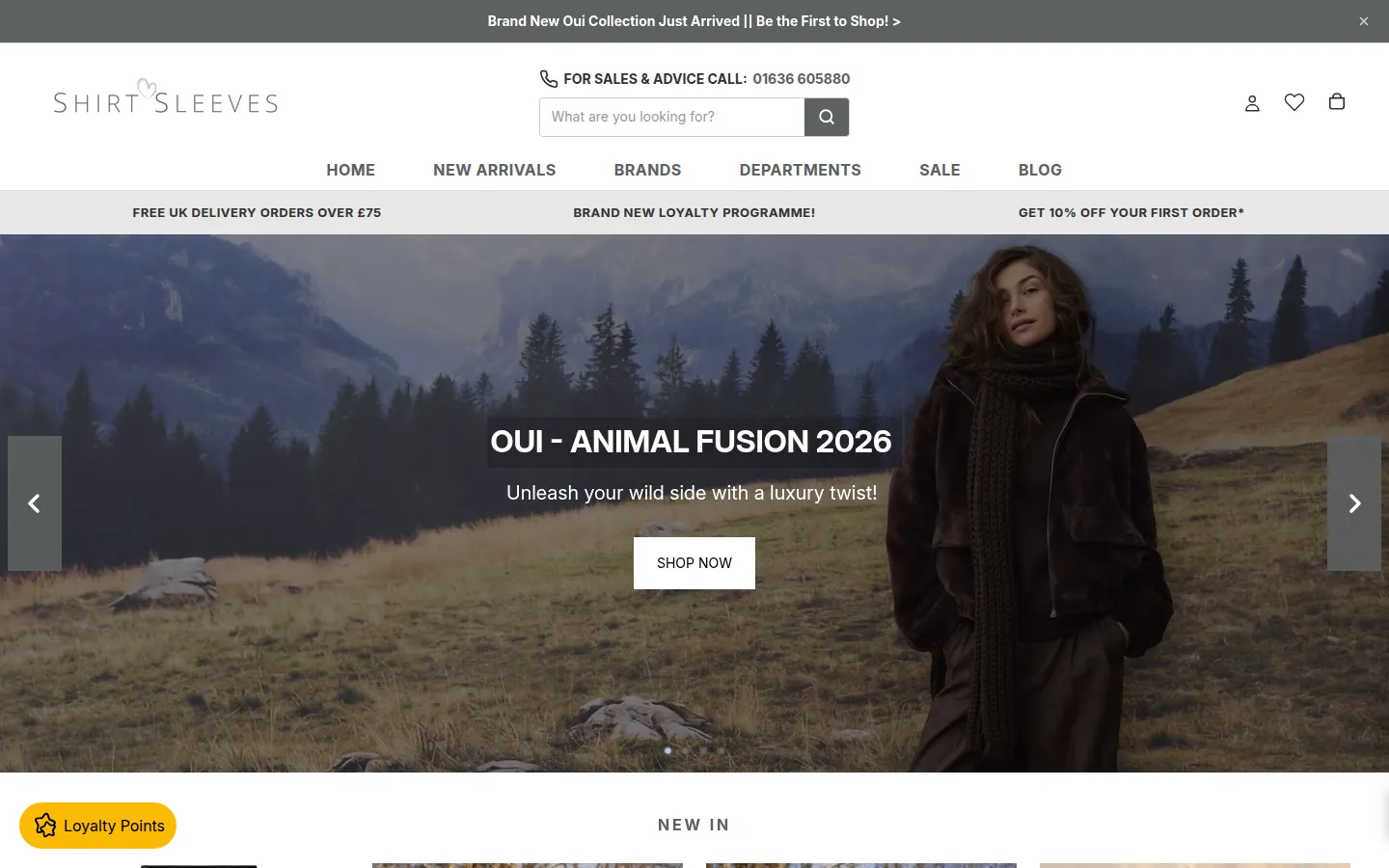 Shirtsleeves
Women's clothing boutique. 28,000 customers with their store credit, 20,000 redirects and a TRIMS integration, moved with no downtime.
Read the case study →
Shirtsleeves
Women's clothing boutique. 28,000 customers with their store credit, 20,000 redirects and a TRIMS integration, moved with no downtime.
Read the case study →
We have worked with Jason & his team to develop our Shopify store, and the experience was outstanding from start to finish. The design is clean, modern, and perfectly aligned with our brand identity, while the build is fast, responsive, and easy to manage on the backend. They clearly understood our vision and delivered a store we’re genuinely proud of. Highly recommend to any brand looking for a top-quality Shopify partner.
Visualsoft are moving their customers to Shopify. Here's what that actually means.
Visualsoft built their business on a proprietary ecommerce platform. It was a good model for many years. But the market has moved decisively toward Shopify, and Visualsoft are responding by pivoting to become a Shopify partner, while working to maintain the commercial relationships and revenue they've built with their existing customer base.
That's a sensible strategy for Visualsoft. But it creates an obvious question for their customers: if I'm moving to Shopify anyway, why am I paying Visualsoft to get me there, and what exactly am I paying them for on the other side?
The answer depends on what you actually need. Some retailers will find genuine value in staying with Visualsoft through the transition. Others will find that an independent Shopify partner delivers a faster, cleaner, and more cost-effective migration, without the commercial overhead of maintaining a relationship that was originally built around a platform you're leaving.
Visualsoft customers are already choosing the independent route.
Dev Partners is currently migrating Visualsoft clients to Shopify without Visualsoft involvement. These retailers made a deliberate choice to work with an independent Shopify specialist rather than remain within the Visualsoft ecosystem. The migrations are running cleanly. The commercial model is simpler. And there's no ongoing platform fee to a provider whose platform they've left.

Honestly, the technology is the easy part. What keeps Visualsoft retailers up at night is whether the move will go smoothly, whether they'll lose their rankings, and what they'll still be paying once the dust settles. That's the part we take off your plate — and you deal with me and Rob directly, not a layer of account managers.
Ecommerce migration explained
What actually happens when you move platform, in four steps: discovery and data mapping, site build and data migration, bespoke integration and URL mapping, then testing and go-live. Your store keeps trading throughout. Full transcript on the page if you would rather read it.
Watch the videoYour three migration routes
There's no single right answer, but there are meaningful differences. Here's an honest comparison.
| Criteria | Stay with Visualsoft | Dev Partners | Another Shopify Agency |
|---|---|---|---|
| Best for | Retailers who want a single managed supplierAnd are comfortable with corporate pricing | Retailers who want independent Shopify expertiseWithout the overhead of staying in the VS model | Retailers without complex Visualsoft-specific requirementsStandard migrations only |
| Ongoing VS fees after migration | x Likely yesVisualsoft will look to maintain revenue relationship | v NoneYou pay for the migration and your Shopify plan. That's it. | v NoneThough check what ongoing retainer looks like |
| Visualsoft platform knowledge | v DeepIt's their platform | v Proven in practiceLive migrations underway right now | ~ LimitedMost agencies haven't done this specifically |
| Conflict of interest | x YesVS have a commercial reason to keep you dependent on them | v NoneWe have no stake in what you do after launch | v NoneIndependent advice |
| Custom development capability | ~ Platform-dependentStrong within their own system; transitioning on Shopify | v Core specialismBespoke Shopify code, ERP integrations, custom workflows | ~ VariesCheck what they've actually built vs configured |
| Speed to go live | ~ Corporate timelinesLayers, sign-offs, account management process | v Focused and directYou deal with the people doing the work | ~ Depends on agency size |
| UK-based team | v UK | v Fully UKNo outsourcing | ~ Varies by agency |
The doubts worth addressing before you decide
The comparison above is deliberately honest in places. If your reaction is “that seems one-sided,” here are the straight answers to the objections we hear most from Visualsoft retailers considering their options.
It is partly true and partly in Visualsoft's commercial interest to say. Migration is a significant project and should be treated as one. It is not something to rush or hand to a generic web agency with no specific experience of Visualsoft's data structure and custom functionality patterns. But it is also not something that should keep you on a platform you have outgrown indefinitely. Done properly, with a structured process, parallel running, comprehensive redirect mapping, and full data migration, it is manageable. Done badly, it can cause real damage. The difference is who you use to do it and how seriously they treat the planning phase.
All of it migrates. Products and variants, customer accounts, complete order history, CMS content, and all associated data. Visualsoft's data structure is not the same as Shopify's, which means some data requires transformation rather than direct transfer. We map every data type before migration begins and validate the output before anything goes live. Customers keep their account access, their order history is visible, and nothing disappears. We have done this migration multiple times and know exactly where the data complexity sits.
Not if it is handled correctly. SEO protection in a platform migration comes down to one thing above everything else: comprehensive 301 redirect mapping from every old URL to its new equivalent. Visualsoft and Shopify use different URL structures, which means every product page, category page, and content page needs a redirect. We map all of them. We also migrate all meta titles, descriptions, and alt text, and conduct a post-migration technical SEO audit. Migrations that cause SEO damage almost always do so because someone treated redirects as an afterthought. We treat them as a core deliverable.
Almost always yes, and usually more cleanly. Visualsoft builds custom functionality within the constraints of its own platform, which means workarounds and patches that would not be necessary on a more flexible foundation. On Shopify, custom functionality is built properly from the start. The audit phase of our migration process specifically identifies every piece of custom functionality your Visualsoft store has and documents what it does, so nothing gets missed. Some things will work differently on Shopify because the platform works differently. We flag those early rather than discovering them at go-live.
No. We run the new Shopify store in parallel with your existing Visualsoft store throughout the build and migration process. Your current store remains fully live and trading. The switch happens at a single planned point when the new store has been fully built, tested, and signed off. The cutover itself typically causes less than an hour of interruption, scheduled at a low-traffic time. You never have a period where you are not taking orders.
Visualsoft can migrate you to Shopify. They have the platform knowledge and the scale. The question is whether a company that spent years building and selling its own competing ecommerce platform is the most motivated and focused partner to migrate you away from it. They also bring the overhead, process, and pricing of a large corporate organisation. We are independent, have no conflicting interest in which platform you use, and have developed a structured migration process specifically for Visualsoft merchants. We know where the complexity sits because we have been through it multiple times, not because we built Visualsoft.
It depends on the size of your catalogue, the complexity of your custom functionality, and what integrations need rebuilding on Shopify. We do not give ballpark figures before we have looked at your current setup. We audit what you have, work out what is genuinely involved, and give you a fixed-price proposal based on that. Migrations that go over budget almost always do so because the quote was given before the complexity was understood. We do not do that.
For a straightforward Visualsoft store with a standard catalogue and no heavy custom functionality, typically 8 to 14 weeks. For a larger store with significant custom development, complex integrations, or a large data set, longer. The most important thing is not to rush it. A migration that takes an extra four weeks and goes live cleanly is vastly better than one that hits an artificial deadline and causes problems after launch. We give you a realistic timeline at the outset based on what we actually find, not what sounds reassuring.
You can, and many clients do. Migrating and redesigning simultaneously is more complex and takes longer, but it avoids doing the work twice. The key is separating the two workstreams clearly: the migration is about function and data integrity, the design is about brand and conversion. Conflating them creates risk. We scope the migration and the design work separately so you know exactly what each costs and what each involves, and we manage the integration between them carefully.
In our experience this does not happen. Businesses that have been on Visualsoft and move to Shopify with a properly built store almost universally find the platform significantly better to manage day to day. The admin is cleaner, the app ecosystem is richer, the performance is better, and the ongoing cost of development is lower because the platform is more flexible. That said, the code we build is yours outright from day one. Nothing we build creates lock-in, and if you ever wanted to move to a different platform in the future, you could.
Your options in plain English
What each route actually involves, and what it means for your business on the other side.
You engage Dev Partners directly as your Shopify migration partner. Visualsoft are not involved. You migrate your products, customer data, order history, and custom functionality to Shopify, and on the other side you have a Shopify store maintained by an independent agency with no commercial stake in keeping you dependent on anything.
This is the route being taken by Visualsoft customers who have looked at the economics and decided that paying Visualsoft to migrate them away from a Visualsoft platform, and then continuing to pay Visualsoft on top of Shopify fees, does not make commercial sense for them.
It requires choosing a partner who actually knows Visualsoft's data architecture, custom functionality patterns, and the specific migration gotchas. That's not every agency. It is what we do, and we're doing it right now.
Visualsoft are positioning themselves as a Shopify partner for their existing clients. If you've had a long and positive relationship with them, value continuity, and are comfortable with managed-agency pricing, this is a legitimate option.
The questions worth asking before you commit: what does your total monthly cost look like after migration, Visualsoft fees plus Shopify fees? What are you paying Visualsoft for specifically on the Shopify side, that you couldn't get from a Shopify-specialist agency? And what does the contract look like, is it easy to leave if the model doesn't work for you?
Visualsoft bring genuine scale, established account management, and institutional knowledge of your existing store. They also bring the pricing model of a large organisation making a strategic transition. Whether that overhead is worth paying for is a commercial decision only you can make.
There are many competent Shopify agencies in the UK. For a straightforward migration, standard product catalogue, no unusual custom functionality, clean data, most experienced Shopify developers can handle it well.
Where Visualsoft migrations get complicated is in the detail: custom pricing rules, bespoke account-based access, accumulated integrations, and years of data that doesn't always map cleanly to Shopify's structure. Most general agencies haven't done this specifically. Ask them directly: have they migrated from Visualsoft before? If the answers are vague, the risk sits with you.
What our clients say
19 clients. A few of their words.
A well-rounded team, ensuring a full suite of expertise & resource is always available. CDS Global have seen the successful completion of major projects over the years where Dev Partners' ability to grasp the underlying business needs to provide a future-proof solution has been invaluable.

We have worked with Jason & his team to develop our Shopify store, and the experience was outstanding from start to finish. The design is clean, modern, and perfectly aligned with our brand identity, while the build is fast, responsive, and easy to manage on the backend. They clearly understood our vision and delivered a store we're genuinely proud of. Highly recommend to any brand looking for a top-quality Shopify partner.

After ongoing issues and delays with our previous developers, we brought in Rob & Jason at Dev Partners to take over all our websites and bespoke software. What a breath of fresh air, fully focused, excellent pre-launch designs and clear communication throughout. Highly recommended.

BPC Energy Ltd turned to Dev Partners for a complete turnkey solution, and they exceeded our expectations. The team handled everything from project management to development and support with real care and attention. They understood what we were aiming for, stayed on top of every detail, and always delivered on schedule with excellent quality.

Working with Dev Partners to redesign and modernise our WMS system: the whole process has been thoroughly professional from the outset and a delight to work with. Cannot recommend enough.

Great agency. Have used Dev Partners for several years and they have built 20+ sites for us, in addition to taking on our legacy websites, upgrading and maintaining. Easy to work with and some great practical ideas to improve our digital offerings.

Jones Hire have been working with Dev Partners on several projects, which have been very successful. They linked our catering database to a new improved website so clients can easily place and update orders, created a custom warehouse picking app to fulfil all our challenging requirements, and are currently developing a custom transport app to streamline our loading and delivery process.

We have been trying to reinvent our website for over 5 years, trying to make it convert and failing each time. Spoke to Rob at Dev Partners, the team helped create our new site and the improvement was instant.

We have been working with Rob and the team for about 10 years now. Dev Partners helped us build a completely bespoke CRM from scratch which manages our daily business and is always well maintained. We have been able to use the system and roll it out in our new franchise branches.

We collaborated with Dev Partners on the front end of a fairly complex telemarketing platform. Rob and Jason took the time to properly understand the moving parts, asked the right questions, and delivered a clean, intuitive interface that's made the system far easier for our team to use.

I have been working with the team at Dev Partners for the last 3 years and we have always been impressed with the speed in which they act on things for us, along with the honest open communication. The team are a valuable and vital part of our supply chain.

We've had a program for our business in the electronic security sector that Dev Partners developed and keep up to date. They've never let us down, always there when needed. Thanks Rob and the team.

Dev Partners have been working with us for just over 2 years. They have significantly upgraded and redesigned our existing web platforms, and always deliver a first class service.

Dev Partners helped us build an event website. The team were very knowledgeable, easy to work with and quick to deliver a high quality product.

Working with Dev Partners has been an exceptional experience. Their team is highly skilled, professional, and committed to delivering results. What truly sets them apart is their communication and transparency; we always felt informed, supported, and confident.

We've worked with Dev Partners a few times to support us on bespoke web build tasks. They're very easy to work with, approachable, and explain the detail in a way that's understandable. A great partner for technical issues at sensible prices.

Excellent customer service backed up with solid experience. As a media business we have had five websites built by Dev Partners. I would certainly recommend them.

Found Dev Partners and they were great, nothing too much trouble. They managed to help us with integrating our old existing system with Shopify.

I've worked with Rob and his team off and on for many years and have always found them to be professional, knowledgeable, and best of all, they listen to their clients and deliver what is required.

We have worked with Dev Partners for 7 years and can highly recommend them for their expertise and excellent customer service.
What makes a Visualsoft migration different
Migrating from Visualsoft to Shopify is not a straightforward replatform. Here's where the complexity actually sits, and why it matters who you use.
Data architecture
Visualsoft's product data structure, custom attributes, and category taxonomies don't map directly to Shopify's model. Getting this right means clean data on the other side. Getting it wrong means years of messy corrections.
Custom functionality
Visualsoft stores often rely on custom pricing rules, account-based access tiers, and bespoke integrations built over years. Each needs to be identified, understood, and replicated in Shopify, not approximated.
SEO preservation
Years of search rankings, backlinks, and indexed URLs need to be preserved through careful 301 redirect mapping. Visualsoft's URL structure is specific. A generic redirect approach will lose rankings built over years.
Customer and order history
Complete customer accounts, order history, and loyalty data need to migrate cleanly. This is business-critical information that needs handling with care, not bulk-imported and hoped for the best.
Third-party integrations
ERP connections, warehouse management systems, fulfilment integrations, and marketing tools all need reconnecting to Shopify. Some will have Shopify apps. Others need custom integration work.
Go-live risk management
The transition from live Visualsoft store to live Shopify store is the highest-risk moment. A staged approach with a clear rollback plan protects your revenue during the switchover.
How we handle it
We've developed a structured migration process built specifically around Visualsoft stores, not adapted from a generic replatforming checklist. We know where the data complexity sits, which custom functionality patterns appear most commonly, and how to replicate them in Shopify in a way that's cleaner and more maintainable on the new platform.
We're not figuring this out for the first time on your project. We're doing it right now.
- Full product catalogue migration including variants, metafields, and custom attributes
- Customer account and complete order history transfer
- 301 redirect mapping built specifically for Visualsoft URL structures
- Replication of custom pricing rules, discount logic, and account-based access
- Reconnection to your existing ERP, warehouse, and fulfilment systems
- Staged go-live process with rollback plan to protect trading continuity
- Post-launch support included as standard
What Visualsoft customers actually ask us
The practical questions we hear most often from retailers weighing up their options.
Questions to ask before you sign anything
Whether you're considering staying with Visualsoft or moving to an independent partner, these are the questions that matter.
What will my total monthly cost be after migration?
Get the full number in writing: your Shopify plan plus any ongoing partner or management fees. Compare this to what you're paying now and what the equivalent independent route would cost.
Have they actually migrated from Visualsoft before?
Ask specifically. Most agencies haven't. Visualsoft's platform has specific data structures and custom functionality patterns that a general migration approach will handle poorly.
Who will be doing the work day to day?
Some agencies pitch senior people and deliver via junior developers or offshore teams. Ask directly who writes the code and manages your project. At Dev Partners, it's the same people you speak to.
What happens to your custom functionality?
Make a list of everything your Visualsoft store does that isn't standard. Then ask each agency directly how they'd handle each item. Vague answers are a risk signal.
What's the exit clause?
If you're signing an ongoing contract with any agency, understand what it costs to leave. A partner confident in their service won't need to lock you in.
How do they handle the go-live risk?
A platform migration puts your live trading at risk during switchover. Ask specifically how go-live is managed, what the rollback plan is, and how they've handled this on previous migrations.
Everything you need to weigh up the move
Practical, jargon-free guides to planning your Visualsoft to Shopify migration.
Migration guide & checklist →
The full process, stage by stage, plus a pre-migration checklist.
What it costs →
What drives the price, and the ongoing-cost difference between routes.
How long it takes →
The phases, what speeds them up or slows them down, and a realistic timeline.
Data & SEO migration →
How products, customers, orders and rankings move across safely.
Visualsoft vs Shopify →
An honest platform comparison: cost, lock-in, performance and apps.
Leaving Visualsoft →
Your three routes and the contract questions to ask before you sign.
Visualsoft to Shopify migration by area
We're a Kent-based Shopify partner serving Kent, Sussex, Surrey and Essex as our core regions, and we deliver Visualsoft migrations remotely for retailers right across the UK.
Visualsoft to Shopify migration across the UK
We also support Visualsoft retailers nationwide, with remote-first delivery, including:
Considering your options on Visualsoft?
Let's have an honest conversation about what your migration actually involves.
We're not going to tell you the independent route is automatically right for every Visualsoft retailer. But we will give you a straight assessment of what's involved, what it would cost, and whether we're the right fit.
What we'll cover:
- Your current Visualsoft setup and what needs migrating
- Your custom functionality and how it maps to Shopify
- Total cost comparison: VS route vs independent route
- Realistic migration timeline and go-live approach
- Whether Dev Partners is the right partner for your project
Calls are typically 30 to 45 minutes. We reply to all enquiries within one working day.
Book a Free Consultation
Tell us about your Visualsoft store and we'll be in touch within one working day.