
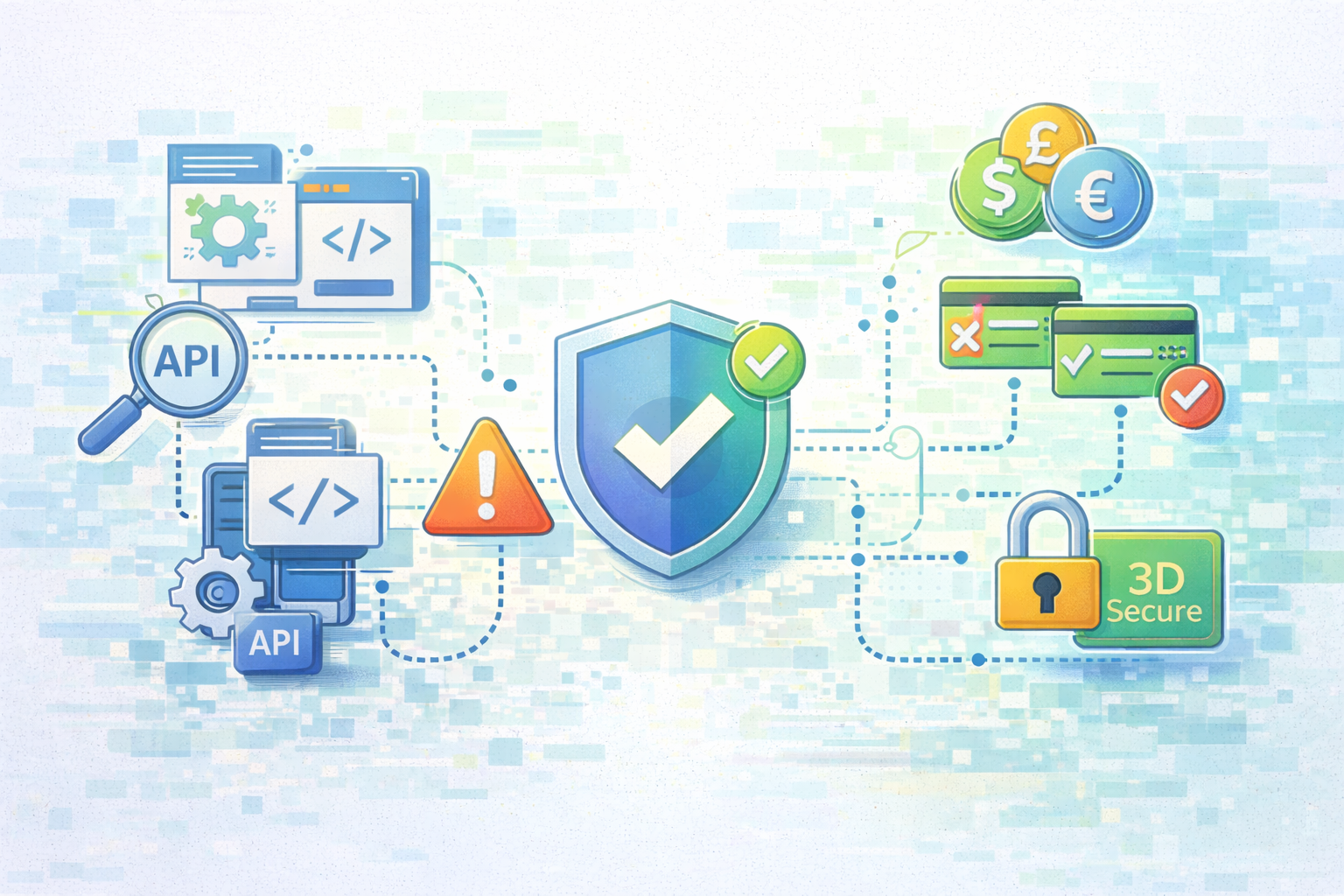
The most expensive mistake in an ecommerce migration is assuming your payment gateway will just work.
It will not.
Every platform talks to payment gateways differently. Different APIs. Different webhook structures. Different security requirements.
If you do not set this up properly and test it thoroughly, orders will fail. Customers will try to pay and get error messages. You will lose sales.
Here is what goes wrong and how to avoid it.
Why Payment Gateways Break
Your current platform has been talking to your payment gateway for years. It knows the right API endpoints. It handles webhooks correctly. It stores card tokens properly.
Your new platform is starting from scratch.
Even if both platforms support the same payment gateway (Stripe, PayPal, Sage Pay, whatever), they integrate with it differently.
API versions differ. Your old platform might use an older API version. Your new platform uses a newer one. The data structures are different.
Webhook URLs change. Payment gateways send confirmation webhooks to specific URLs. When you change platforms, those URLs change. If you do not update them, confirmations fail.
Security settings differ. 3D Secure, fraud detection rules, AVS checks. These all need reconfiguring on the new platform.
Currency and tax handling. The new platform might send transaction data in a different format. This can break tax calculations or currency conversions.
All of these problems are fixable. But only if you know they exist before you go live.
The Testing Gap
Most migrations test the checkout with one or two successful transactions.
Customer fills in details. Enters card number. Order goes through. Everything looks fine.
But that does not catch the edge cases:
- What happens if a card is declined?
- What happens if 3D Secure fails?
- What happens if the customer closes the browser mid-payment?
- What happens if the webhook takes 30 seconds to arrive?
- What happens with American Express vs Visa vs Mastercard?
- What happens with international cards?
- What happens if fraud detection flags a transaction?
Each of these scenarios can break in different ways. And you will not know until a real customer hits that scenario.
Webhook Failures Are Silent
Webhooks are how payment gateways tell your platform that a payment succeeded.
Customer pays. Gateway processes payment. Gateway sends webhook to your platform. Platform marks order as paid.
If the webhook fails, the payment goes through but your platform does not know about it.
From the customer's perspective, everything worked. They paid. From your perspective, the order is stuck in pending.
You do not realise until the customer emails asking where their order is. By then you have lost time, damaged trust, and created support work.
Common webhook problems:
- Webhook URL not updated on gateway account
- New platform expecting different data format
- Webhook hitting old platform instead of new one
- SSL certificate issues blocking webhooks
- Firewall or security rules blocking incoming webhooks
- Timeout issues if webhook response takes too long
Test webhooks explicitly. Do not assume they work.
The Stripe Migration Problem
Stripe is the most common payment gateway. It is also one of the trickiest to migrate.
Customer tokens do not transfer. If customers have saved cards on your old platform, those tokens are tied to that platform's Stripe integration. They do not work on the new platform.
Customers will need to re-enter their cards. This is annoying but unavoidable.
Subscriptions need migrating carefully. If you do recurring billing through Stripe, those subscriptions are tied to the old integration. You need to migrate them to the new platform or run both integrations in parallel during transition.
Webhook endpoints need updating. Your Stripe account sends webhooks to specific URLs. Update these before you switch platforms.
Test mode vs live mode. Make sure you are testing in Stripe test mode, not accidentally using live mode credentials. And make sure you switch to live mode when you go live.
The PayPal Problem
PayPal integrations are usually simpler than Stripe, but they have their own issues.
IPN (Instant Payment Notification) needs reconfiguring. Like webhooks, IPNs tell your platform that payment succeeded. The URL needs updating for the new platform.
PayPal Express vs Standard. Different integration methods behave differently. Make sure the new platform uses the same method or understand the differences.
Currency conversion. PayPal can handle currency conversion, or your platform can. Make sure only one is doing it, or customers get charged wrong amounts.
The Sage Pay (Opayo) Problem
Sage Pay recently rebranded to Opayo and changed their API.
If your old platform uses the old Sage Pay API and your new platform uses the new Opayo API, you need to update your account settings and potentially get new credentials.
This is not automatic. You have to do it manually. If you do not, payments fail.
The 3D Secure Problem
3D Secure adds an extra authentication step for card payments. It reduces fraud but complicates checkout.
Different platforms handle 3D Secure differently. Some trigger it for all transactions. Some only for high-risk ones. Some let you configure rules.
Make sure your new platform's 3D Secure setup matches your risk tolerance and customer experience expectations.
And test it. 3D Secure failures are confusing for customers and generate support queries.
The Multi-Currency Problem
If you sell internationally in multiple currencies, payment processing gets complicated.
Who does the conversion? The payment gateway? Your platform? Make sure it is configured correctly.
What currency do you charge? GBP? USD? Local currency? Make sure the gateway knows.
How do refunds work? Refunding in a different currency to the original charge can cause problems.
Test all of this with real transactions in test mode.
How To Test Properly
Do not just test successful payments. Test everything.
Test successful payments:
- Multiple card types (Visa, Mastercard, Amex)
- Different browsers and devices
- With and without 3D Secure
Test failures:
- Declined cards
- Insufficient funds
- Expired cards
- Failed 3D Secure
Test edge cases:
- Customer closes browser mid-payment
- Slow internet connection
- Multiple rapid payments
- Very large transactions
- Very small transactions
Test webhooks:
- Payment succeeds
- Payment fails
- Delayed webhook
- Duplicate webhook
- Missing webhook
Use the gateway's test mode and test cards. Document everything. Fix problems before launch.
What To Do Before Cutover
Before you switch platforms:
- Update webhook URLs in your payment gateway account
- Verify API credentials are correct for new platform
- Test all payment methods thoroughly
- Test refund process
- Check fraud detection settings
- Verify SSL certificate is valid
- Test in multiple currencies if applicable
- Train team on how to handle failed payments
Do not assume it will work. Verify everything.
What To Monitor After Launch
Watch payments closely for the first few days after launch.
Check every order. Make sure payments are processing. Make sure webhooks are arriving. Make sure confirmation emails are sending.
Look for patterns. Are certain card types failing? Are international payments breaking? Are webhooks delayed?
Fix problems immediately. Every failed payment is lost revenue.
What To Do Next
Do not treat payment gateway setup as a quick checkbox. It is one of the most important parts of migration.
Get someone technical to configure it properly. Test it exhaustively. Monitor it closely.
A payment gateway problem can cost you thousands in lost sales before you even notice.
Need help with your migration? Our Platform Migration Service includes thorough payment gateway testing and configuration. Book a discovery call and we will make sure your payments work perfectly.