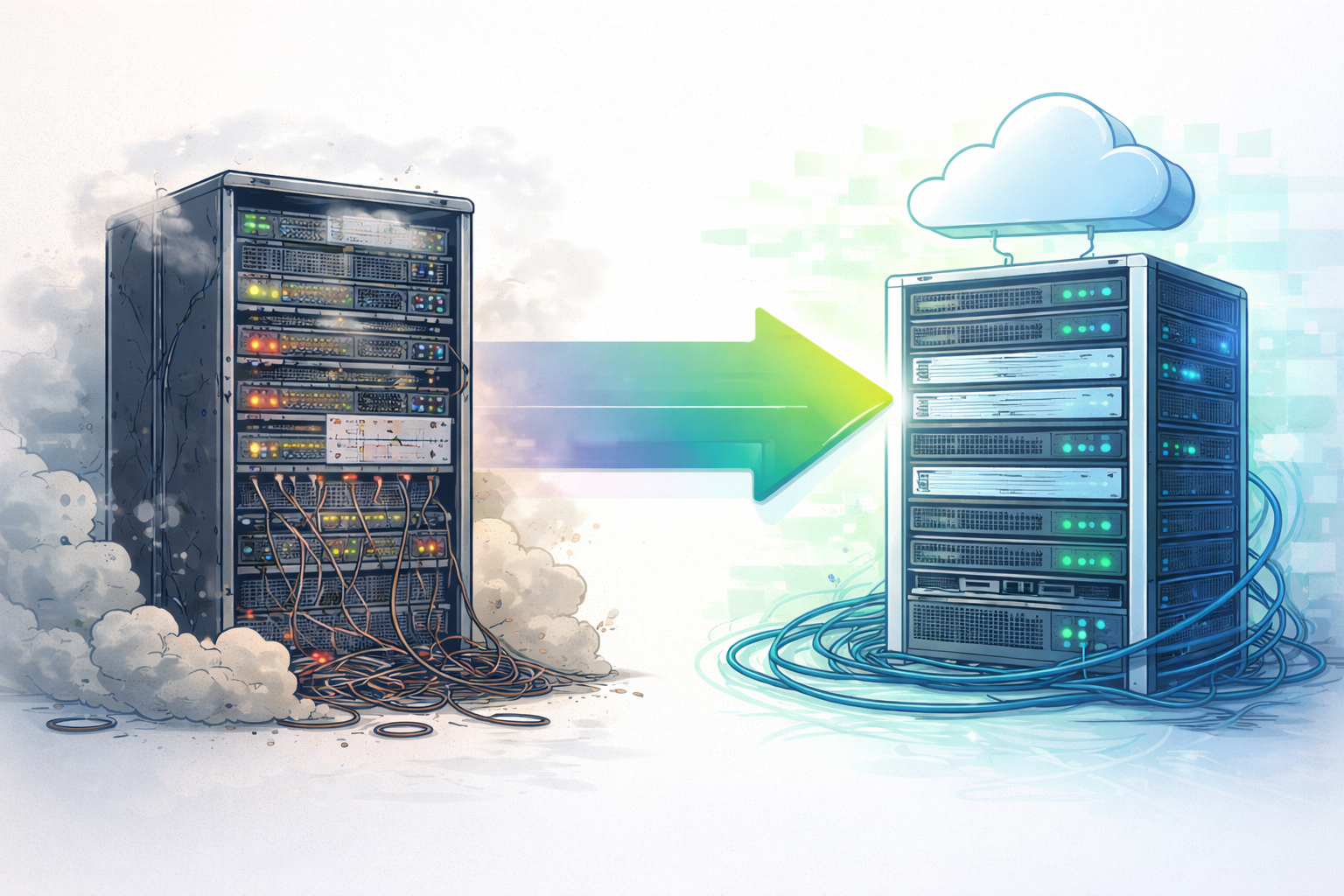
Your ecommerce platform is old.
Not just a few years old. Properly old. Built a decade ago. Customised by developers who left years ago. Running on technology nobody uses anymore.
It still works. Mostly. But it is slow, fragile, and increasingly expensive to maintain.
You know you need to migrate. But legacy migrations are different to normal migrations. They are riskier, more complicated, and harder to plan.
Here is what you are dealing with.
Why Legacy Systems Are Different
Modern platforms have documentation. APIs. Export tools. Support forums. Developers who know how they work.
Legacy platforms have none of this.
The original developer left five years ago. The documentation is outdated or missing. The codebase is custom and nobody quite understands all of it. There is no export function because the platform was built before data portability was a thing.
You might not even know what platform it is. Just "the website" that someone built in 2012.
This makes migration complicated.
The Discovery Problem
With a modern platform, discovery is straightforward. You know what platform you are on. You can export sample data. You can access the admin and see how everything is structured.
With legacy systems, discovery takes longer.
You need to work out what data actually exists and where it lives. Not just products and customers, but all the custom fields, relationships, and business logic that have accumulated over the years.
Product data. How are products structured? What fields exist? How are variants handled? What custom attributes matter? Where are images stored?
Customer data. What information do you hold? How are customer accounts structured? What security measures exist? Can passwords be exported or do customers need to reset them?
Order data. How far back does order history go? What format is it in? What additional data is attached to orders?
Business logic. What happens behind the scenes? Custom pricing rules? Automated stock management? Integration with other systems?
All of this needs documenting before you can plan the migration.
The Data Extraction Challenge
Modern platforms have export functions. Click a button, download a CSV.
Legacy platforms often have no export function. The data is locked in a database that may or may not be accessible.
Sometimes you can access the database directly and write SQL queries to extract data. Sometimes you need to build a custom export script. Sometimes you need to scrape data from the admin interface.
All of this takes time and technical skill.
And once you have the data, it is often messy. Incomplete fields. Inconsistent formatting. Duplicate records. Data that made sense ten years ago but is meaningless now.
Cleaning this up before migration is essential but time-consuming.
The Integration Problem
Your legacy platform probably talks to other systems. ERP. Warehouse management. Accounting. Email marketing.
These integrations were built years ago. They may be fragile. They may rely on the specific way your old platform works.
When you migrate, all of these integrations need rebuilding.
Sometimes the other system has a modern API and this is straightforward. Sometimes the other system is also legacy and integrating it with a modern platform is complicated.
Budget time and cost for this. Integration work often takes longer than the actual data migration.
The Feature Replication Problem
Your legacy platform does things in specific ways. Some of these are standard ecommerce features. Some are custom to your business.
Replicating standard features on a new platform is easy. Products, categories, checkout, orders. Every modern platform does these.
Replicating custom features is harder.
Maybe your old platform has a custom quote system. Or a bespoke B2B area. Or unusual pricing logic. Or a specific way of handling subscriptions.
All of this needs rebuilding on the new platform.
Some features can be replaced with standard platform functionality or apps. Some need custom development.
Work out which is which early in the process. Custom development adds cost and time.
The Risk Factor
Legacy migrations are riskier than normal migrations because there are more unknowns.
You do not know what you do not know. There are probably features and dependencies that nobody remembers until you try to switch them off.
The only way to reduce this risk is thorough discovery and testing.
Spend time understanding exactly what the old system does. Document everything. Then test the new system exhaustively before you switch.
Timeline Reality
Legacy migrations take longer than modern platform migrations.
Discovery takes longer because you are working with less documentation. Data extraction takes longer because there are no export tools. Custom feature replication takes longer because you are building from scratch.
A simple modern migration might take 8 weeks. An equivalent legacy migration might take 16 weeks or more.
Factor this into your planning.
When to Consider Rebuilding Instead
Sometimes migration is not the right answer. Sometimes a complete rebuild makes more sense.
If your legacy platform is so old and custom that extracting and migrating data is harder than just rebuilding, rebuild.
If the custom features are so specific to the old platform that they cannot be replicated, rebuild them from scratch on a modern platform.
If the old system is so fragile that even touching it risks breaking things, start fresh.
There is no shame in this. Sometimes the cleanest solution is to accept that the old system is done and build a new one properly.
You can still migrate historical data for reference. But the platform itself is retired rather than migrated.
What To Do Next
Do not underestimate a legacy migration. It is always more complicated than it looks.
Start with thorough discovery. Get someone technical to really understand what you have. Then plan the migration properly based on what you find.
And budget more time and cost than you think you need. Legacy migrations always reveal surprises.
Need help with a legacy migration? Our Platform Migration Service includes the technical expertise to work with old systems nobody else understands. Book a discovery call and we will assess what you are dealing with.