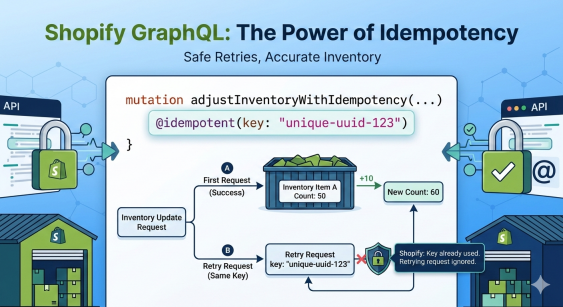
What is Idempotency?
In the world of APIs, an **idempotent** operation is one that can be performed multiple times without changing the result beyond the initial application.
With the `inventorySetQuantities` or `inventoryAdjustQuantities` mutations, providing an `idempotencyKey` ensures that if you send the exact same request twice (due to a timeout or retry logic), Shopify recognizes the key and ignores the second attempt, returning the cached response from the first successful call.
---How to Implement It
To use idempotency, you simply include the `idempotencyKey` argument in your mutation. This key should be a unique string (like a UUID) generated by your system for that specific business action.
Here is how you would structure a call to adjust inventory levels safely:
GraphQL
mutation adjustInventoryWithIdempotency($input: InventoryAdjustQuantitiesInput!) {
  inventoryAdjustQuantities(input: $input) @idempotent(key: "unique-uuid-128934") {
    inventoryLevels {
      id
      quantities(names: ["available"]) {
        name
        quantity
      }
    }
    userErrors {
      field
      message
    }
  }
}
The Variables Object
{
  "input": {
    "reason": "restock",
    "name": "available",
    "changes": [
      {
        "delta": 10,
        "inventoryItemId": "gid://shopify/InventoryItem/12345678",
        "locationId": "gid://shopify/Location/87654321"
      }
    ]
  }
}
Why This Matters for Your Store
• Prevent Double-Counting: Essential for high-volume flash sales where every unit counts.
• Reliable Retries: You can safely wrap your API calls in a `while` loop or a background job queue that retries on 5xx errors.
• Consistency:/ Keeps your Warehouse Management System (WMS) and Shopify perfectly in sync, even when the internet is being flaky.
Key Rules to Remember
• Unique Keys: Never reuse a key for a different set of changes.• Timeouts: If your first request timed out but was actually processed by Shopify, the second request with the same key will simply return the result of that first success.
• Payload Matching: If you send the same `idempotency` but change the `delta` value in the body, Shopify will return an error because the payload doesn't match the original key's intent.